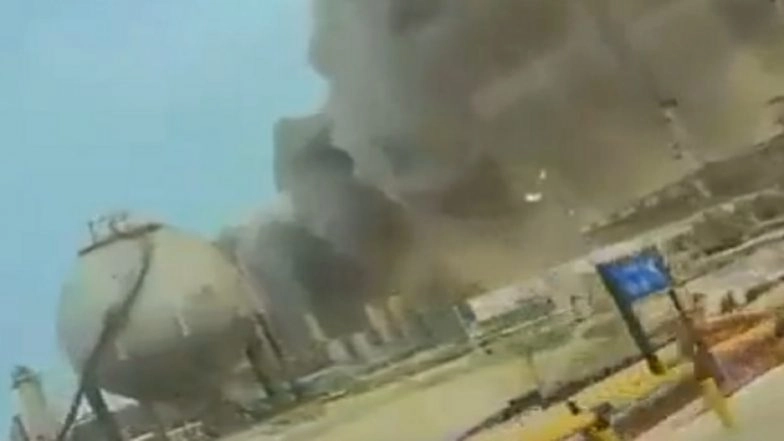
The Ras Tanura oil refinery in Saudi Arabia, a critical global energy hub, was targeted in a drone attack on Monday, March 2. While Saudi air defenses intercepted the incoming drones, resulting debris ignited a fire at the facility, prompting Saudi Aramco to temporarily halt operations. This incident has sent shockwaves through global energy markets, causing Brent crude prices to surge. This attack comes amid escalating tensions in the Middle East.
Drone Strike on Ras Tanura: A Detailed Look
Initial reports from the Saudi Ministry of Defense confirmed the attack. Two drones were successfully intercepted. However, falling debris caused a localized fire within the refining complex. Emergency teams swiftly brought the blaze under control, and no injuries have been reported. The attack occurred near Dammam, with videos circulating online showing thick black smoke billowing from the facility.
• Impact on Production: Saudi Aramco has suspended operations at Ras Tanura, impacting global oil supply. • Price Surge: Brent crude oil prices surged nearly 10%, reaching approximately USD 80 per barrel. • Regional Context: The attack occurred amidst escalating regional hostilities, including retaliatory strikes between Iran and its regional proxies.
Analysts are warning that the targeting of Saudi energy infrastructure represents a significant escalation, with the global oil supply chain now directly in the line of fire. The Ras Tanura complex is a cornerstone of the global energy economy, processing massive amounts of crude oil daily.
Escalating Middle East Tensions: A Broader Conflict
The attack on Ras Tanura comes amid a sharp increase in hostilities across the Middle East. The region is reeling from a series of US and Israeli airstrikes against Iran. These have resulted in the death of the Supreme Leader Ayatollah Ali Khamenei. In response, Tehran and its proxies have launched drone and missile strikes targeting Israel, US military assets, and energy infrastructure throughout the Gulf. This includes sites in the UAE, Qatar, and Kuwait.
• Retaliatory Strikes: Iran and its allies have retaliated with drone and missile strikes. • Targets: Strikes have targeted Israel, US military assets, and energy infrastructure. • Geopolitical Impact: The conflict's expansion threatens global stability.
This marks a dramatic expansion of the conflict. It directly threatens global energy supplies and could have profound economic consequences worldwide. Military officials in Saudi Arabia are on high alert, and authorities are taking measures to safeguard their facilities. There are unconfirmed reports that Iran's interim leader, Alireza Arafi, was killed in an airstrike. This information remains unverified.
Signal vs. Noise: Understanding the Implications
Signal: The drone attack on Ras Tanura highlights the vulnerability of critical energy infrastructure. It also underscores the escalating tensions in the Middle East.
Noise: Unverified reports and speculation surrounding casualties and the exact perpetrators of the attack. Focus on verified information from official sources.
Expert Analysis: Dr. Emily Carter, a geopolitical analyst specializing in Middle Eastern affairs, notes: "This incident is a clear indication that the conflict is moving into a new and dangerous phase. The targeting of energy infrastructure is a strategic move, designed to exert maximum pressure and create global instability. We can expect oil prices to remain volatile for the foreseeable future. The international community must act swiftly to de-escalate the situation and prevent further escalation."
The attack on Ras Tanura marks a critical moment in the ongoing conflict, with potential ramifications for the global economy. The situation is rapidly evolving. It requires careful monitoring and a cautious approach from all involved parties.
The Bottom Line
The drone attack on Saudi Arabia's Ras Tanura oil refinery is a major event. It shows the growing instability in the Middle East. It has already impacted global oil markets and could have far-reaching consequences. The international community needs to work together to contain the conflict. The focus should be on de-escalation and protecting global energy supplies.