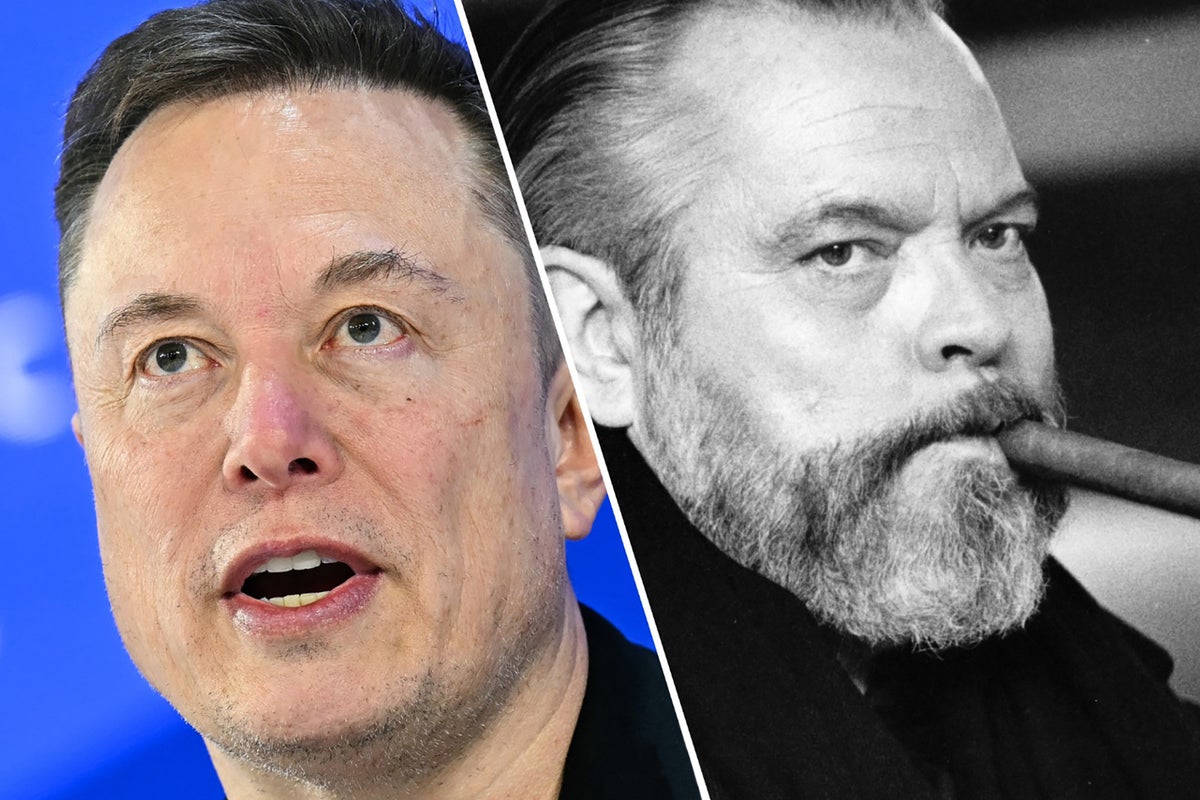
A Clash of Eras: Modern Outcry Meets Welles's Vision
The anticipation surrounding a major Hollywood adaptation of Homer's The Odyssey has ignited a familiar debate, centered on the casting of the iconic Helen of Troy. Reports suggest a prominent director's decision to cast a Black actor in the role has drawn sharp criticism from certain public figures, including billionaire entrepreneur Elon Musk.
Critics have voiced their displeasure, with statements suggesting such casting choices demonstrate a lack of integrity and a misunderstanding of the source material. Online commentary has characterized the decision as a "desecration" of classical texts and attributed it to trends such as "woke" ideology and diversity initiatives.
This sentiment echoes previous controversies surrounding the casting of Black actors in roles traditionally portrayed by white performers, such as Halle Bailey in The Little Mermaid and Rachel Zegler in Snow White.
Orson Welles: The Unlikely Precedent
However, the current controversy invites a look back at a pioneering moment in American cinema history. Orson Welles, the visionary director behind Citizen Kane, was an early proponent of diverse casting. His 1936 production of Shakespeare's Macbeth, set in Haiti during the Depression and often referred to as "Voodoo" Macbeth, featured an entirely Black cast.
Welles, who was only 20 at the time, was tasked with directing a federally funded Shakespeare production in Harlem. His bold artistic choice involved relocating the play's setting from the Scottish Highlands to a Haiti-inspired locale. The witches were reimagined as voodoo priestesses, and the score incorporated African drummers and dancers.
Of the approximately 150 actors involved, only a small fraction were seasoned professionals. Rehearsals were reportedly intense, marked by creative friction between Welles and his cast. Despite these challenges, the production ultimately achieved a remarkable sense of cohesion and artistic success.
Reinterpreting Myth: Helen of Troy and Artistic License
The criticism leveled against the casting of Helen of Troy often centers on the character being perceived as "historically white." This perspective suggests that casting a Black actor amounts to "racism against white people," despite the historical context of Troy being located on the coast of modern-day Turkey.
It is worth noting that the appearance of Helen of Troy, a figure from Greek mythology, has been subject to interpretation throughout history. Past portrayals have featured actresses of various backgrounds, including Diane Kruger, Sienna Guillory, and Elizabeth Taylor. Furthermore, Helen is depicted as a demigod, born from the egg of a swan, a fantastical origin that inherently allows for creative interpretation.
As the actress Lupita Nyong'o, reportedly cast as Helen, stated, "This is a mythological story." The sentiment suggests that myths, by their nature, are open to reinterpretation and that retelling them in different ways does not constitute desecration but rather a new telling of an enduring narrative.
"Voodoo" Macbeth: A Different Reception
When Orson Welles's "Voodoo" Macbeth premiered in New York in 1936, it was met with a different cultural climate. While the production significantly altered Shakespeare's original text by reimagining Scottish characters as freed African slaves, it arrived before the deep-seated cultural divides that characterize today's debates.
Initial criticisms were largely confined to Shakespearean purists and some members of the Harlem Communist Party, who initially feared Welles might mock the actors. However, the production was a resounding success, drawing large crowds and critical acclaim, demonstrating that bold artistic choices, even those that deviate significantly from tradition, can resonate deeply with audiences.