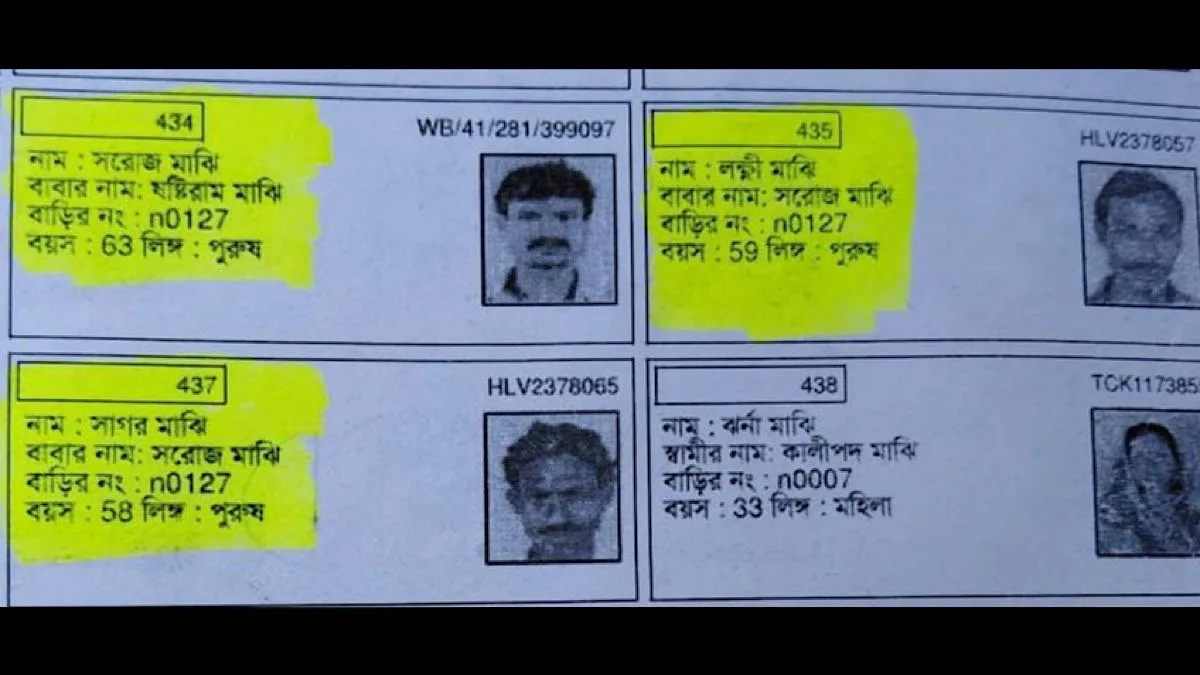
In a twist that could easily be mistaken for a plot straight out of a Bollywood film, a recent investigation in Bengal has unearthed a startling discovery: two brothers, whose ages are strikingly close to that of the man officially designated as their father. The Special Intensive Revision (SIR), tasked with examining the intricate web of familial relationships, stumbled upon this anomaly, prompting a deeper dive into the family's background and raising significant eyebrows amongst legal and sociological experts. This development not only challenges conventional notions of family structures but also has the potential to trigger legal ramifications. The findings have ignited a firestorm of discussion across local communities and media outlets.
This isn't an isolated incident. India, with its complex societal structures and diverse cultural practices, often sees complicated family dynamics. However, the proximity in age between the alleged father and sons in this particular case, discovered through meticulous record analysis by the SIR, is particularly unusual. The investigation typically scrutinizes a variety of documents: birth certificates, property records, and any other evidence that might help determine relationships and reveal discrepancies.
So, what exactly did the SIR uncover? The details are still emerging, but here's a breakdown of the key findings, as far as they have been officially released:
• The SIR found that the two brothers in question are approximately five years younger than the man listed as their father on official documents. This means that, statistically, it's highly improbable the man is indeed their biological father.
• Initial investigations revealed discrepancies in the reported ages on their birth certificates. These anomalies have triggered further scrutiny, with officials exploring whether the initial records were intentionally falsified. The primary purpose could be to legitimize the familial relationships for various social and material gains.
• The investigation has expanded to include a forensic analysis of potential biological evidence. This would likely involve DNA testing to establish the true biological links between the individuals. Results of these tests are pending.
• Local community members have expressed shock and intrigue about the revelation, with many speculating about the underlying reasons for the discrepancy. Social media has seen a flurry of commentary, debating the ethical and legal implications.
• The SIR has begun to explore the possibility of criminal charges, including fraud and potentially, in certain circumstances, charges related to bigamy or other offenses, should the official records be shown to be deliberately misleading.
• Several family members, including the man designated as the father and the brothers, are cooperating with the investigation, but their testimonies so far haven't fully clarified the situation.
The ongoing investigation serves as a stark reminder of the importance of accuracy in official records and the complexities that arise when these records fail to reflect reality. As the SIR continues its work and the results of the forensic investigations are released, further details will likely emerge. The findings have the potential to set legal precedents and could lead to changes in policy regarding the verification of familial relationships. The implications extend far beyond this specific case, opening up a broader dialogue on societal norms, family structure and the crucial role of legal accuracy in a rapidly changing world. It's a story that promises to evolve, with potentially far-reaching legal and social consequences.