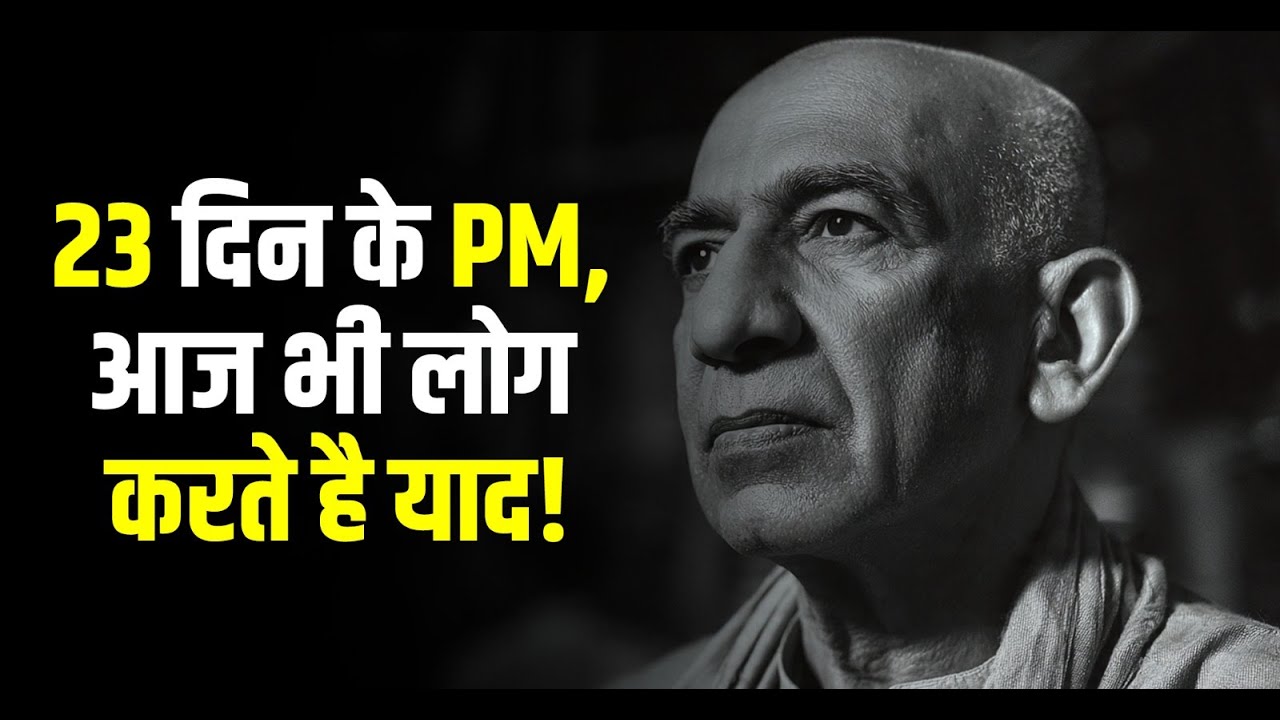
A Voice From the Villages: Unpacking Charan Singh's Enduring Impact
Chaudhary Charan Singh's name resonates deeply in India, particularly within the farming communities he championed. More than just a former Prime Minister, he embodied a political philosophy centered on the upliftment of rural India, a vision that continues to shape political discourse even today. His life and career are a testament to the power of agrarian interests in shaping the nation's trajectory, and a lens through which to examine evolving rural-urban dynamics.
Born in 1902 in Uttar Pradesh, Singh’s early life exposed him to the realities of rural life and the struggles of farmers. He entered politics with a commitment to addressing their concerns, a focus that would define his decades-long career. He became a vocal critic of policies he believed favored urban elites and industry at the expense of the agricultural sector. His core belief was that India's prosperity lay in its villages.
His political journey was marked by a tenacious defense of farmer rights and a deep understanding of land revenue systems. Here’s a closer look at some key aspects:
• Legislative Champion: Singh spearheaded crucial legislative reforms, including the abolition of the zamindari system, aimed at empowering landholders and reducing the power of intermediaries. This was a critical step in democratizing land ownership.
• Advocate for Farmers: He consistently advocated for policies that would benefit farmers, including fair pricing for agricultural produce, access to credit, and protection from exploitation. He challenged established policies which he believed were biased against rural India.
• Prime Ministerial Tenure: He briefly served as Prime Minister of India. While his time in office was short-lived, it served as a platform to further his vision for rural development and strengthen agricultural policies.
• Ideological Foundation: He was a strong proponent of socialist ideals, with a focus on farmer-friendly policies. His emphasis on decentralization and empowering village communities resonated with the population at large.
• Legacy and Influence: Singh's political ideology has significantly influenced political parties and policymakers. Many policies regarding agricultural practices, support for farmers, and rural employment schemes can trace their origins back to his initiatives.
• Book Writing: His book, “India’s Economic Policy – The Gandhian Way”, articulated his ideas on economic policies.
"He understood the pulse of the farmers, the challenges they faced daily,” commented an industry expert, adding that his impact is still felt today.
His legacy remains complex. While hailed as a champion of the farmer, some critics argue his policies sometimes overlooked the complexities of modernizing India’s economy. Supporters, however, counter that his focus on rural India was crucial for national development, and that his vision laid the foundation for several farmer-friendly initiatives later adopted by various governments.
In conclusion, Chaudhary Charan Singh’s life serves as a powerful reminder of the enduring importance of rural India in the nation's political landscape. His contributions continue to be debated and analyzed, ensuring that his vision and principles remain a crucial aspect of India's political and economic discourse for years to come. His focus on empowering the agricultural community, however, has set an enduring benchmark for policy making.