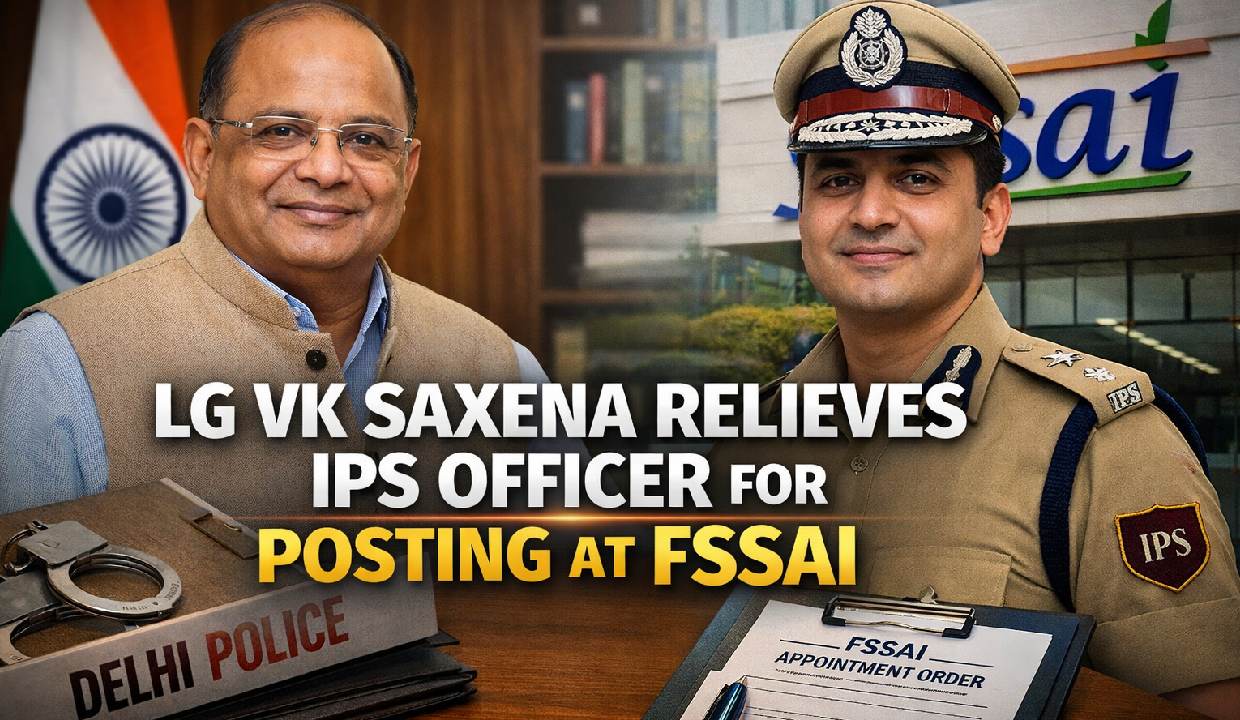
The Delhi Lieutenant Governor, Vinay Kumar Saxena, has approved the relieving of Additional Commissioner of Police (New Delhi) Devash Kumar Mahla to join the Food Safety and Standards Authority of India (FSSAI) as Director on deputation. The order, issued on February 23, marks a significant shift for Mahla, who will now be involved in shaping India's food safety standards. This move, sanctioned under foreign service terms for an initial period of one year, follows a communication from the Ministry of Home Affairs (MHA) on January 30.
Mahla's Transition: From Law Enforcement to Food Safety
Devash Kumar Mahla, an IPS officer from the AGMUT cadre (2012), is transitioning from his role in the Delhi Police to the FSSAI. This move is significant as it brings a law enforcement perspective to an organization focused on food safety and regulation. The deputation is based on foreign service terms, indicating the importance and strategic nature of this role.
• The LG's order, dated February 23, officially relieves Mahla from his Delhi Police posting. • He will serve as Director, FSSAI, on a deputation basis. • The initial deputation period is one year. • This decision aligns with a directive from the Ministry of Home Affairs.
This transition raises questions about the strategic goals behind this move. Why bring a police officer into food safety regulation? What specific skills and expertise does Mahla bring to the FSSAI? The answers to these questions will likely become clearer as Mahla begins his new role.
Decoding the Deputation: Signal vs. Noise
The move of an IPS officer to FSSAI can be viewed through the lens of signal versus noise. Let's break it down:
Signal:
• Enhanced Enforcement: Bringing in an officer with a law enforcement background could signal a stronger focus on enforcing food safety regulations. Mahla's experience in investigations and compliance could be valuable. • Improved Coordination: This move might aim to improve coordination between law enforcement agencies and food safety regulators, potentially leading to more effective investigations and prosecutions related to food adulteration and safety violations. • Streamlined Processes: The appointment could streamline processes related to inspections, investigations, and the handling of food safety-related complaints.
Noise:
• Bureaucratic Shuffle: Some might view this as a routine bureaucratic reshuffle, with no significant impact on food safety standards. • Lack of Specialized Expertise: Critics may argue that an IPS officer lacks the specific technical expertise required for effective food safety regulation. • Potential Conflicts of Interest: Concerns could arise regarding potential conflicts of interest, especially if Mahla's past work intersects with the food industry.
This appointment underscores the ongoing efforts to strengthen food safety mechanisms in India. It will be crucial to monitor the impact of Mahla's leadership at FSSAI.
FSSAI's Mandate and Future Implications
The FSSAI is a statutory body established under the Food Safety and Standards Act, 2006. Its primary responsibility is to ensure the availability of safe and wholesome food for human consumption. This involves setting standards, regulating manufacturing, processing, distribution, sale, and import of food, and educating consumers about food safety.
• Standard Setting: The FSSAI develops and enforces food safety standards, including those for additives, contaminants, and packaging. • Licensing and Registration: The authority licenses and registers food businesses to ensure they comply with food safety regulations. • Surveillance and Monitoring: The FSSAI conducts surveillance and monitoring activities to ensure that food products meet safety standards.
Mahla's role as Director could significantly influence FSSAI's operations. His experience in law enforcement might lead to more rigorous enforcement of food safety standards, potentially resulting in stricter penalties for violators. The impact of this appointment will depend on the strategies and policies that Mahla implements within the FSSAI.
The Bottom Line
The appointment of Devash Kumar Mahla to the FSSAI is a notable development. It demonstrates a proactive approach to improving food safety standards, potentially leading to stronger enforcement and greater public trust. While the full implications remain to be seen, this move highlights the Indian government's commitment to ensuring the safety and quality of food consumed across the nation.