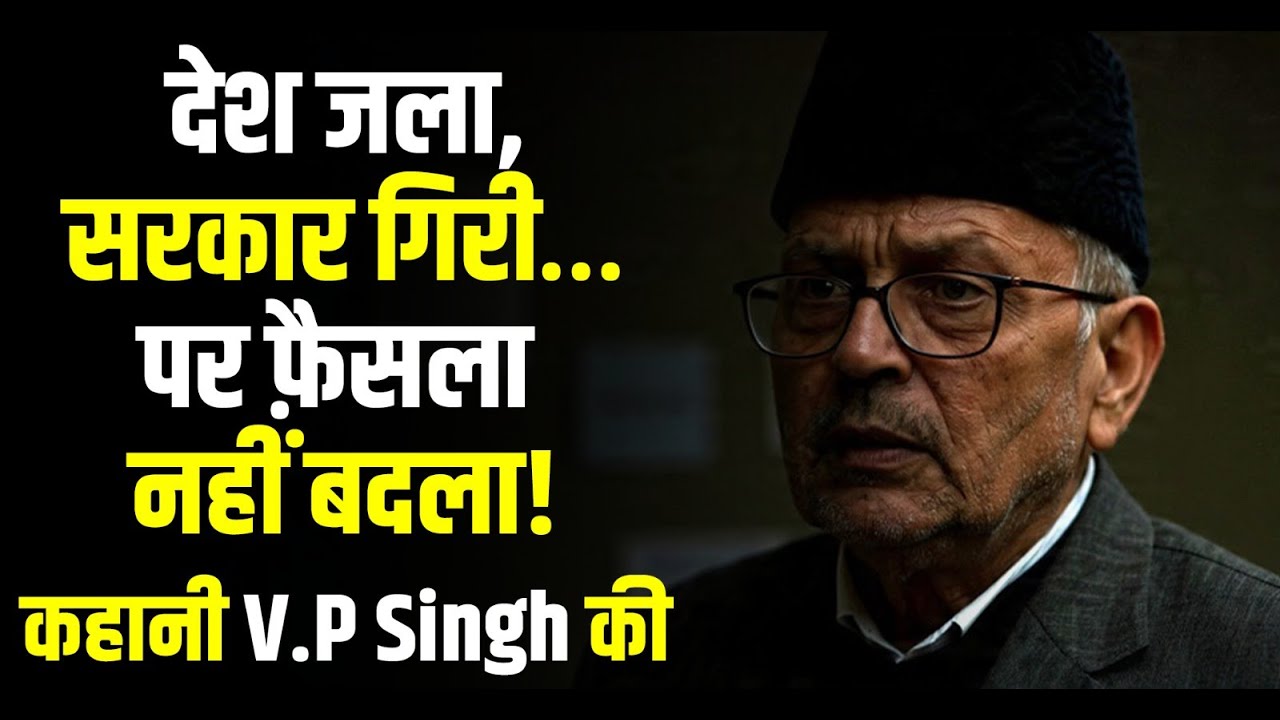
Remembering VP Singh: The Unexpected Prime Minister and His Enduring Legacy
The name Shri Vishwanath Pratap Singh often evokes a complex tapestry of memories and emotions in India. For some, he's the champion of social justice, the man who dared to challenge the established order. For others, he's the controversial figure whose policies fractured the political landscape. Regardless of the perspective, there's no denying that VP Singh, as he was popularly known, left an indelible mark on Indian politics, one that continues to reverberate decades after his time in office.
VP Singh’s tenure as Prime Minister of India, though relatively short, from December 1989 to November 1990, was packed with transformative, and at times, tumultuous events. His rise to the top was, in many ways, unexpected. He wasn't the preordained heir to the political throne. He was a somewhat reluctant leader, thrust into the role at a time of significant national upheaval and shifting political alignments. Before becoming Prime Minister, Singh held key portfolios, including Finance and Defence, gaining valuable experience that would shape his decision-making later.
His legacy is multifaceted and often debated. He is remembered as a man of principle, committed to fighting corruption and championing the marginalized. But he was also a leader who faced numerous challenges, including internal conflicts within his coalition government and escalating social unrest. Understanding his time in office requires delving into the key policies and events that defined his premiership:
• The Mandal Commission Implementation: This is arguably VP Singh's most enduring and controversial legacy. The implementation of the Mandal Commission recommendations, which aimed to provide reservations for Other Backward Classes (OBCs) in government jobs and educational institutions, triggered widespread protests and social division across India. While supporters hailed it as a landmark step toward social justice, critics argued that it entrenched caste divisions and created inefficiencies.
• Anti-Corruption Drive: VP Singh launched an aggressive anti-corruption campaign, targeting prominent figures and perceived corruption within the political establishment. This crusade earned him praise from many who were tired of the cronyism that was perceived to be rampant, but also led to political instability and animosity from those implicated.
• Economic Liberalization: Singh's tenure saw the initial steps towards economic liberalization. His government began to loosen some of the stringent regulations that had hampered economic growth. This was a prelude to the more comprehensive reforms that would follow later. These were early steps, and the impact was somewhat less dramatic compared to subsequent initiatives, but they signaled a shift in direction.
• Kashmir Unrest: VP Singh inherited a simmering insurgency in Jammu and Kashmir. The situation deteriorated during his tenure, with increased violence and rising tensions. His government's handling of the crisis was subject to much scrutiny, with various perspectives on whether the approach was too heavy-handed or too conciliatory.
• Political Instability: Singh's government was a coalition of diverse parties, which inherently carried inherent fragility. The coalition faced constant threats and challenges, ultimately leading to its collapse within a year. The instability of this period highlighted the difficulties of governing through compromise, especially in a complex political environment.
• The Ram Janmabhoomi Movement: The VP Singh government faced the escalating Ram Janmabhoomi movement. Singh's decisions and actions regarding the issue, including the arrest of prominent leaders involved, are still debated and analyzed. This was an example of the delicate balance he had to walk to address religious and political sensitivities.
An industry expert notes that VP Singh’s actions, however divisive, forced a reckoning within India's political and social spheres. His commitment to social justice and transparency reshaped the national discourse, compelling citizens to confront issues that had long been ignored. However, this also led to intense divisions that still linger.
“Singh was a complex figure,” according to one academic specializing in Indian political history. “He was idealistic, perhaps to a fault, but also politically astute. His choices reflected a genuine desire to address deep-seated inequalities, but also a naivety about the potential consequences of such drastic changes.”
Supporters of VP Singh often point to the long-term impact of his policies, arguing that the Mandal Commission implementation, despite its difficulties, empowered marginalized communities and contributed to a more inclusive society. His anti-corruption drive, they say, set a precedent for holding public officials accountable.
Critics, on the other hand, frequently cite the social unrest and political instability that characterized his time in office. They argue that the Mandal Commission implementation exacerbated caste divisions, and that his handling of various crises, including those in Kashmir, was flawed. Some claim his idealism blinded him to the realities of power and compromise.
The echoes of VP Singh’s premiership are still heard today. The debate over social justice, reservation policies, and the role of government in addressing inequality continues to be front and center in the Indian political landscape. His policies continue to be assessed, and their impact studied.
His legacy serves as a reminder that political leadership is not simply about wielding power, but about making choices that can have profound and lasting consequences, for better or worse. VP Singh’s time in office serves as a case study in navigating these complex, often conflicting, demands. The debate surrounding his premiership, and his ultimate impact on India, is likely to continue for many years to come, a testament to the complex legacy of a leader who dared to challenge the status quo.