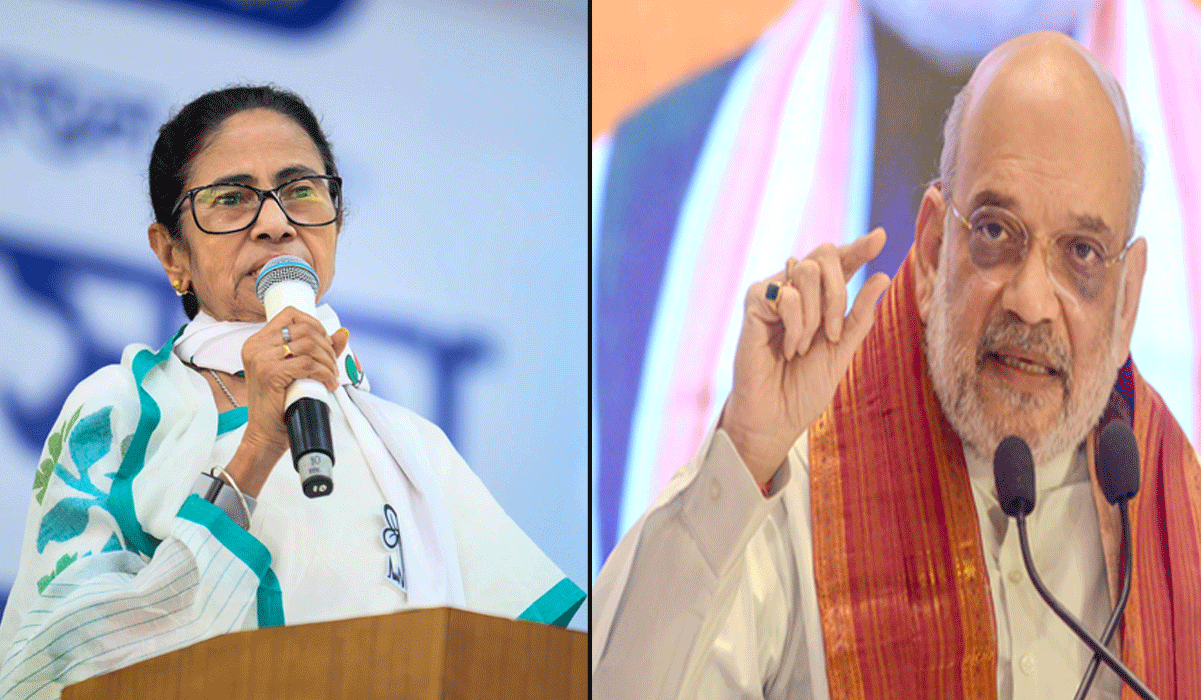
Shah Questions Mamata on Voter Roll Hurdles in Bengal
Union Home Minister Amit Shah has criticized West Bengal Chief Minister Mamata Banerjee, questioning why the Special Intensive Revision (SIR) of electoral rolls faced so many obstacles in West Bengal compared to other states. He stated that the Supreme Court had to intervene in West Bengal, unlike in other states, including those governed by opposition parties. Shah made these remarks while releasing a 'White Paper' against the Trinamool Congress government, which the BJP has termed a "chargesheet of the public." The core of the issue revolves around the integrity of the voter rolls and allegations of protecting illegal immigrants.
The SIR Controversy: A Deep Dive
Shah's primary concern centers around the SIR process, a critical exercise to ensure the accuracy of voter lists. He highlighted that the exercise was completed smoothly in 14 other states, including Tamil Nadu and Kerala, both governed by opposition parties. The Home Minister directly accused West Bengal district magistrates of bias, leading to judicial intervention. He suggested that the state government was deliberately creating hurdles.
• Key Issue: SIR faced unprecedented hurdles in West Bengal compared to other states. • Allegation: District Magistrates in West Bengal acted in a biased manner. • Accusation: Mamata Banerjee's government aimed to protect illegal immigrants.
Signal vs. Noise: The central message is clear: Shah is using the SIR issue to attack Mamata Banerjee's government, accusing them of manipulating voter rolls for political gain. The noise includes the usual political rhetoric and accusations.
Expert Analysis: Electoral roll revisions are crucial for fair elections. Any interference or bias can undermine the democratic process. This situation in West Bengal raises serious questions about the fairness of the upcoming elections. The involvement of the Supreme Court underscores the severity of the alleged irregularities.
Officer Transfers and Political Accusations
Shah also addressed the Election Commission of India (ECI)'s decision to transfer officers before elections, a standard practice. He pointed out that this process is common across India, but the high rate of transfers in West Bengal is because most officers operate at the behest of the ruling party. He implied that the transfers are a necessary step to ensure free and fair elections, and attributed the decrease in violence during Ram Navami to the change in officers. Furthermore, Shah accused Mamata Banerjee of playing the victim card by feigning illness and making accusations about Bengalis being in danger.
• ECI Transfers: Shah defends the ECI's actions, stating they are standard procedure. • Allegation: Mamata Banerjee is using victimhood tactics. • Infiltration: Shah addresses concerns about illegal immigrants.
Signal vs. Noise: The signal is that Shah is attempting to discredit Mamata Banerjee by portraying her as manipulative and playing the victim. The noise includes familiar political accusations and counter-accusations.
Expert Context: The ECI's independence is crucial for free and fair elections. Political interference in the ECI's decisions can compromise its integrity. The transfer of officers is often a contentious issue during elections, as parties seek to influence the electoral process.
The Bottom Line
Amit Shah's statements paint a picture of a state government allegedly trying to manipulate the electoral process. The accusations are serious and, if true, threaten the integrity of the upcoming elections. The release of a 'White Paper' signifies the BJP's strategy to intensify its campaign against the Trinamool Congress. The issue highlights the importance of fair and unbiased electoral practices in a democracy. The political battle is heating up, with both sides leveraging accusations and counter-accusations to gain an advantage.