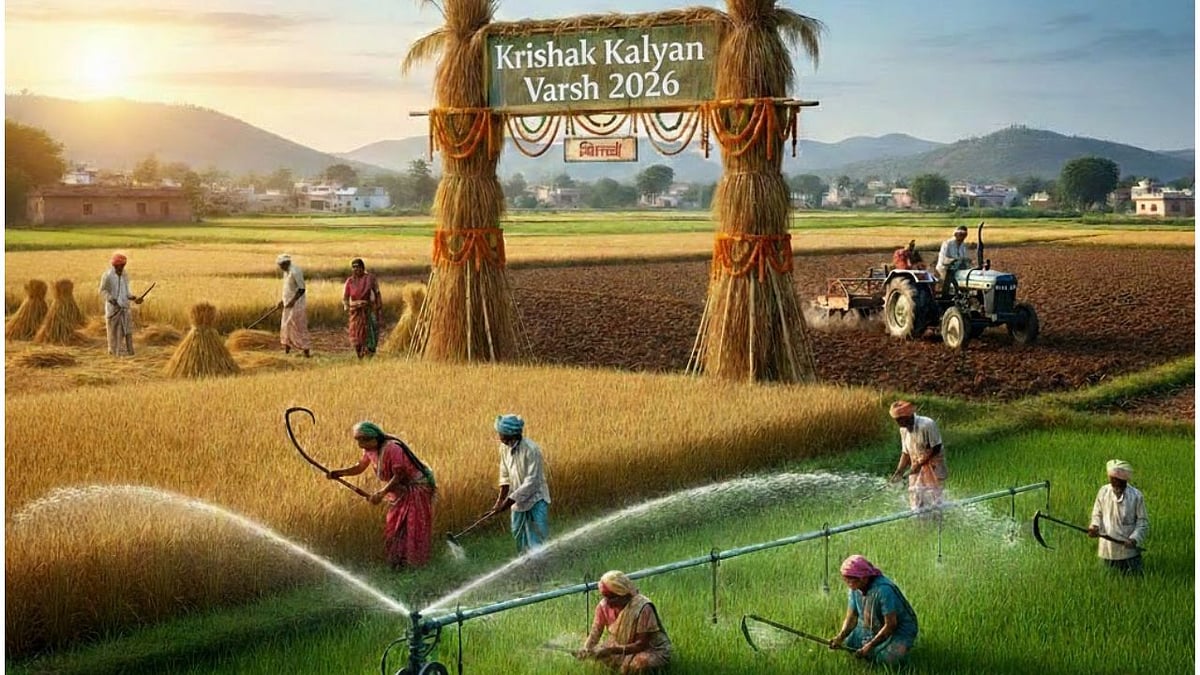
Madhya Pradesh Commits Billions to Farmers and Reforms
On February 26, 2026, the Madhya Pradesh (MP) cabinet approved the continuation of five crucial schemes for farmers, allocating a significant ₹10,500 crore. This decision, announced in Bhopal, underscores the government's commitment to agricultural development and support. Alongside, the cabinet sanctioned amendments to the MP Administrative Re-organisation Commission, signaling efforts to streamline governance.
Agricultural Schemes: A Deep Dive
The cabinet's decision ensures the continuation of key agricultural programs under 'Krishak Kalyan Varsh' for the next five years, from April 1, 2026, to March 31, 2031. These schemes are critical to supporting farmers and boosting agricultural productivity across the state.
• PM Rashtriya Krishi Vikas Yojana: Approved funding of ₹2,008.683 crore. • Pradhan Mantri Krishi Sinchai Yojana (Per Drop More Crop): Allocated ₹2,393.97 crore. • National Food Security and Nutrition Mission: Received ₹3,285.49 crore. • National Mission on Natural Farming: Granted ₹1,011.59 crore. • National Food Oil Mission-Oilseeds: Awarded ₹1,793.87 crore, specifically benefiting mustard farmers during the Rabi season of 2025-26.
Signal vs. Noise
Signal: The substantial investment in these schemes highlights the government's dedication to agricultural sustainability, improved irrigation, food security, and promotion of natural farming practices.
Noise: While the financial commitment is notable, the actual impact will depend on effective implementation, transparent fund allocation, and timely delivery of benefits to the farmers.
Bhavantar Yojana and Mustard Procurement
In addition to the scheme extensions, the cabinet confirmed the implementation of the price deficit payment scheme, Bhavantar Yojana-Mustard, in collaboration with the Government of India. Mustard procurement will be conducted across designated Mandis within the state from March 23 to May 30, 2026. This initiative aims to protect mustard farmers by ensuring they receive a fair price for their produce, thereby mitigating potential losses due to market fluctuations. This directly impacts the income and financial stability of mustard farmers.
Administrative Re-organisation Commission: Key Amendments
The cabinet also approved amendments to the directives concerning the MP Administrative Unit Re-organisation Commission, originally published in the Extraordinary Gazette on March 12, 2024. These revisions are designed to enhance the commission's operational efficiency and expertise.
Revised Provisions
• The chairperson will be selected based on their extensive administrative experience and qualifications. • The chairperson will receive a salary equivalent to that of the Principal Secretary of the State Government, inclusive of all applicable allowances. • If a retired government officer is appointed as chairperson, their pension (prior to commutation) will be adjusted, and the remaining amount will be paid as salary/honorarium, along with relevant allowances. • Two members will be appointed from retired government officers with a minimum of 20 years of service, having retired from the rank of Secretary or above. Their remuneration structure will follow adjusted pension calculations. • The commission will have a Secretary/Administrative Officer, also appointed from retired officers of Secretary/Additional Secretary rank, with a remuneration structure similar to that of the March 12, 2024, notification.
Signal vs. Noise
Signal: The amendments indicate an effort to bring in experienced administrators and streamline the commission's functioning to support organizational effectiveness.
Noise: The impact of these changes will depend on the actual selection of individuals and their ability to drive meaningful administrative reforms. There is a risk of this being just a procedural change, unless it brings a palpable improvement in bureaucratic processes.
Expert Analysis
“The MP government's decisions reflect a broader trend across India towards bolstering the agricultural sector and reforming administrative structures,” says Dr. Sharma, an agricultural economist. “The focus on sustainable practices like natural farming and enhanced irrigation, alongside price support mechanisms, are steps in the right direction. However, effective execution and monitoring will be crucial to realize the intended benefits. The administrative changes are a welcome step, but the actual transformation will be seen by how efficiently it operates.”
The Bottom Line
The Madhya Pradesh cabinet's recent approvals represent a comprehensive strategy aimed at fostering agricultural prosperity and enhancing administrative efficiency. The substantial financial commitments to farmer-centric schemes, along with the restructuring of the Administrative Re-organisation Commission, indicate a proactive approach toward sustainable development. The success of these initiatives hinges on effective implementation, transparent governance, and the ability to adapt to evolving challenges in the agricultural landscape and administrative spheres. It is a sign of long-term planning, and it must be implemented effectively.