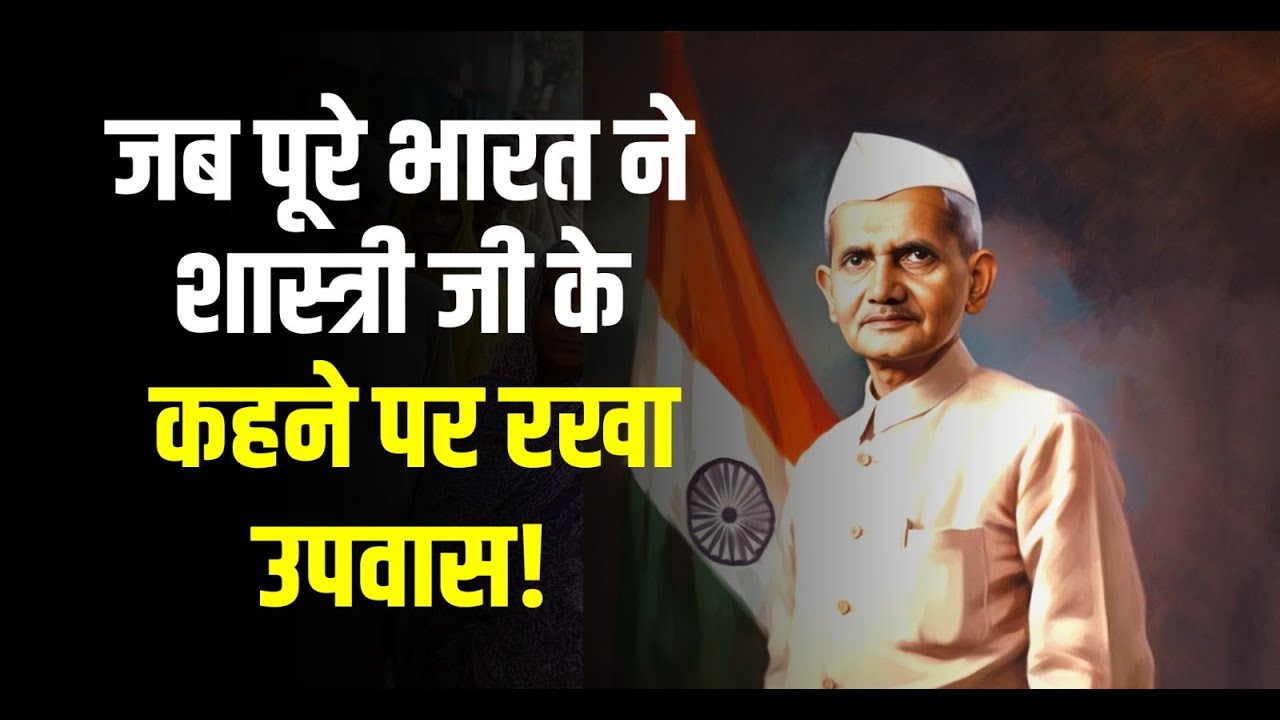
The Day India Shared a Meal of Hunger
The aroma of a Friday night dinner, usually a comfort for millions, was missing. Instead, a shared understanding of self-imposed austerity hung heavy in the air. This wasn't a mandated dietary regime; it was a national fast. This was India, in 1965, responding to the call of its Prime Minister, Lal Bahadur Shastri, and a looming food crisis.
The image of a nation intentionally hungry might seem unbelievable today, decades removed from that tumultuous time. But it remains a potent reminder of Shastri's leadership and the sacrifices made to steer India through a period of severe instability. It's a story of courage, unity, and a leader's ability to connect with the very soul of the nation.
A Nation on the Brink: Context of the Food Crisis
To understand the gravity of Shastri's decision, one must delve into the circumstances. India, recently independent, was battling a persistent food shortage. The Green Revolution, which would revolutionize agricultural practices, was still years away. Monsoon failures were common, and the country heavily relied on imported food, primarily from the United States, under the infamous PL-480 agreement (Public Law 480). This dependency came with strings attached, as the US exerted influence on India's policies.
The year 1965 was particularly harsh. A severe drought swept across the country, exacerbating existing food shortages. India was also in the midst of the Indo-Pakistani War, adding immense pressure on resources. Food prices skyrocketed, and the specter of widespread famine loomed large.
In this atmosphere of uncertainty and crisis, Shastri made his pivotal move.
Shastri's Bold Decree: The Fast of a Lifetime
Shastri's call for a weekly fast was not a mere symbolic gesture. It was a calculated strategy, a demonstration of solidarity, and a plea for national self-reliance. He understood that a united India could overcome any challenge. Here's a look at the key developments:
• The Prime Minister's example: Shastri himself observed the fast, further amplifying the message. He ate only one meal a day and encouraged his family to do the same. This personal commitment resonated deeply with the public.
• A call to the nation: Through radio broadcasts and public addresses, Shastri urged every citizen, regardless of their social standing, to abstain from eating one meal a week. The date was set for every Monday, a day which already had religious and social importance.
• Widespread participation: The response was astounding. From bustling metropolises to remote villages, people embraced the fast. Families adjusted their routines, and communities organized collective fasts, reinforcing the sense of unity.
• Governmental support: The government implemented measures to ensure the smooth functioning of the fast. This included regulating food distribution and rationing to prevent hoarding and price gouging. A public outcry over a reported restaurant owner, who refused to observe the fast, and later relented, speaks volumes about the mood of the time.
• Boosting domestic production: Alongside the fast, Shastri’s government focused on bolstering agricultural output through various initiatives. This included encouraging farmers to adopt new technologies and ensuring adequate access to resources.
• Impact on the war effort: In an era of limited resources, the practice proved beneficial. Resources were redistributed and allocated judiciously, and the national consciousness was heightened. It brought the spirit of national solidarity, to see through the war.
Expert Analysis: A Legacy of Unity and Self-Reliance
"Shastri's fast was a masterstroke of leadership," says Professor Sudha Ramachandran, a historian specializing in post-independence India. "It wasn't just about managing the food crisis; it was about fostering a sense of national identity and resilience during a time of great vulnerability."
She adds, "His emphasis on self-reliance laid the groundwork for policies that would eventually pave the way for the Green Revolution."
Dr. Arun Sharma, an economist, points out the lasting impact. "The weekly fast also highlighted the importance of indigenous food production and reduced dependence on foreign aid. It served as a powerful reminder of the nation’s potential to feed itself.”
The implications of Shastri’s actions were far-reaching. The movement helped mitigate the immediate food crisis, and the collective sacrifice galvanized the nation, fostering a sense of shared responsibility. This in turn, bolstered the national resolve during the war with Pakistan and spurred initiatives aimed at agricultural self-sufficiency.
Looking Ahead: Lessons for Today
Shastri's bold move offers valuable lessons for modern India. In a world grappling with climate change, economic uncertainties, and global conflicts, the importance of self-reliance, national unity, and responsible leadership remains paramount. Shastri's legacy reminds us that collective action, even in the face of hardship, can lead to positive change.
The story of the national fast isn't just a historical anecdote; it's a testament to the power of shared responsibility and the enduring spirit of a nation united in its pursuit of a better future. It's a reminder that true leadership often lies not in commanding, but in connecting with the hearts and minds of the people.