Congress Names Vinod Jakhar as NSUI National President
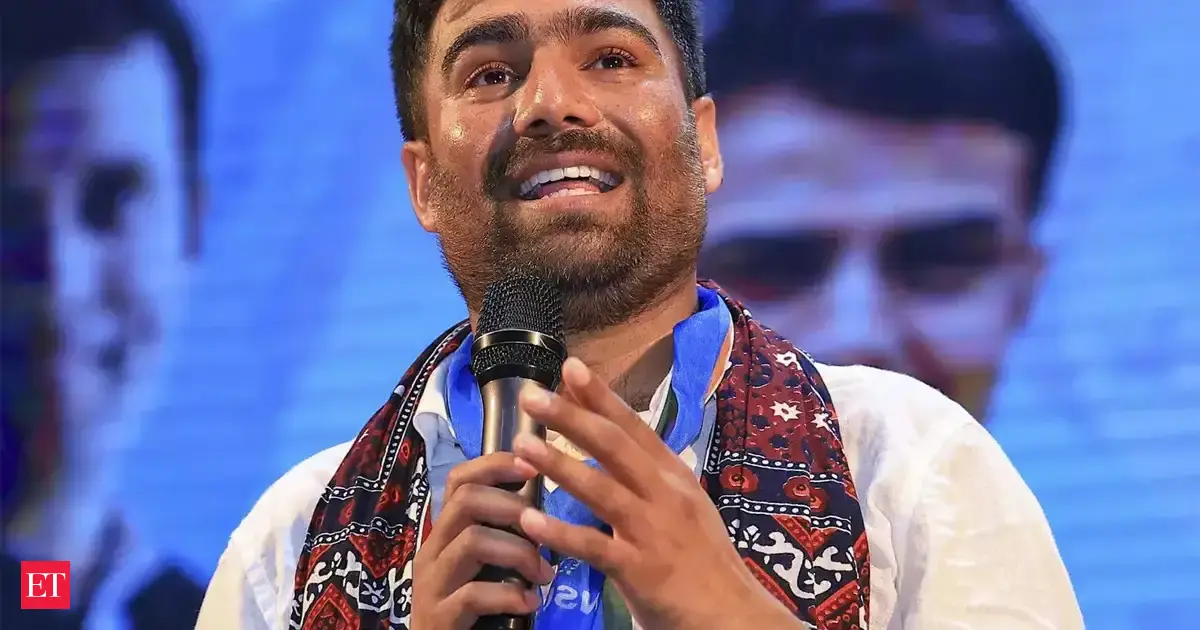
The Congress party has appointed Vinod Jakhar as the new National President of the National Students' Union of India (NSUI), its student wing. The announcement, made on Friday, marks a significant change in the leadership of the NSUI, a crucial platform for the party to connect with the youth. Jakhar, formerly the head of the NSUI's Rajasthan unit, steps into the role with immediate effect. This decision, approved by party chief Mallikarjun Kharge, comes at a pivotal time for student politics across India.
Jakhar's Rise: From Rajasthan to National Stage
Vinod Jakhar's appointment is notable for several reasons. He previously served as the president of the Rajasthan University Student Union, showcasing his experience in student leadership. His recent past, however, has also drawn attention. In September of the previous year, Jakhar was arrested and jailed on charges related to vandalism at an RSS event. He spent 17 days in jail before being granted bail by the Rajasthan High Court. This incident adds a layer of complexity to his profile as he assumes his new national role.
• Key Fact: Jakhar’s appointment was made by Congress President Mallikarjun Kharge. • Context: The NSUI plays a key role in university politics and student engagement. • Impact: The move is expected to energize the NSUI ahead of upcoming university elections.
With Jakhar's elevation, the position of NSUI Rajasthan unit chief has become vacant, and a new appointment will be made soon. This creates a ripple effect, setting in motion further leadership changes within the organization. This appointment comes at a time when student politics is poised for increased activity, with various university elections on the horizon, including the highly anticipated Delhi University Students' Union (DUSU) polls. Jakhar's experience and recent past will undoubtedly shape his approach to leading the NSUI during this crucial period.
Signal vs. Noise
Signal: Jakhar’s appointment signals the Congress's continued focus on youth engagement and student politics. Noise: Jakhar's past legal troubles add a layer of challenge and scrutiny.
Analyzing the Congress's Strategy
The Congress party's decision to appoint Jakhar reflects its broader strategy to regain influence and connect with younger voters. Student organizations like the NSUI are critical for grassroots mobilization and shaping the narrative among the youth. The move also highlights the party's attempt to rejuvenate its organizational structure, especially in regions like Rajasthan where student politics plays a significant role. The replacement of Varun Choudhary, the outgoing NSUI chief, indicates the Congress's willingness to adapt and refresh its leadership to meet evolving political challenges.
Key Takeaways:
• The Congress is prioritizing youth engagement through the NSUI. • Jakhar's past experiences will be closely watched. • The upcoming DUSU elections will be a key test for the NSUI.
Expert Analysis
Political analysts suggest that the Congress is attempting to leverage the NSUI to counter the influence of other student organizations, such as the ABVP (Akhil Bharatiya Vidyarthi Parishad). They see this as part of a broader strategy to revitalize the party's image and connect with younger voters who may feel disconnected from traditional political structures. The choice of Jakhar, with his experience in Rajasthan student politics, reflects the importance the Congress places on localized strategies and mobilizing at the state level.
The Bottom Line
Vinod Jakhar's appointment as NSUI National President represents a strategic move by the Congress party to strengthen its presence in student politics. While his past raises questions, his experience and leadership skills are expected to be pivotal in the upcoming university elections. The focus on youth engagement is clear, and the party aims to make significant gains in student politics. Only time will reveal how effective this leadership change will be in achieving the Congress's objectives. The NSUI is a critical battleground for influence and will be keenly observed by analysts and voters alike.